 Case Studies
RyderGyde
Get Roadside Assistance fast, right when you need it — plus locations, fuel rates, and maintenance.
A stranded driver doesn't have time to figure out an app.
The Research
Process


Empathy Map
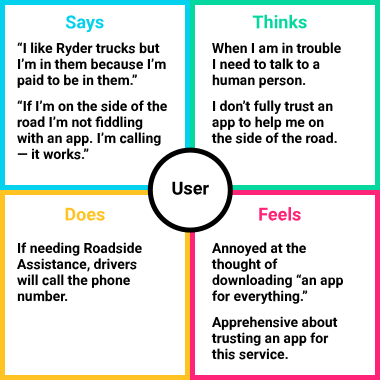 An empathy map helps us establish our personas by finding their voices, feelings, and motivations.
User Pain Points
1. “Calling Gets Results”
For decades drivers have been calling for Roadside Assistance and it has worked. Stranded on the side of the road is not the ideal situation to experiment with an app.
2. “I Don't Want Another App”
Many drivers believe there are already too many useless apps on their phones. They won't download a native app unless it is absolutely necessary.
3. “I Didn't Know This Existed”
Despite various attempts to promote the apps and its features, many drivers still didn't know that they could use RyderGyde to get Roadside Assistance.
Our User
Randy, Truck Driver



“When I'm driving, I'm focused on the destination. If something happens, then I'll manage.”
Randy's primary focus on every trip is to get the payload to point B efficiently. With over 20 years of experience, he's no stranger to persevering through obstacles.

Goals
- Get the payload to Point B as fast as possible
- Get Roadside Assistance to his vehicle quickly if an event occurs

Frustrations
- Being stranded on the side of the road filled with uncertainty
- Starting a Roadside Assistance case from scratch on the phone
- Having to interact with an unfamiliar app during an emergency
Randy's User Journey
Primary task: Find a way to quickly get Roadside Assistance to his distressed Ryder vehicle.
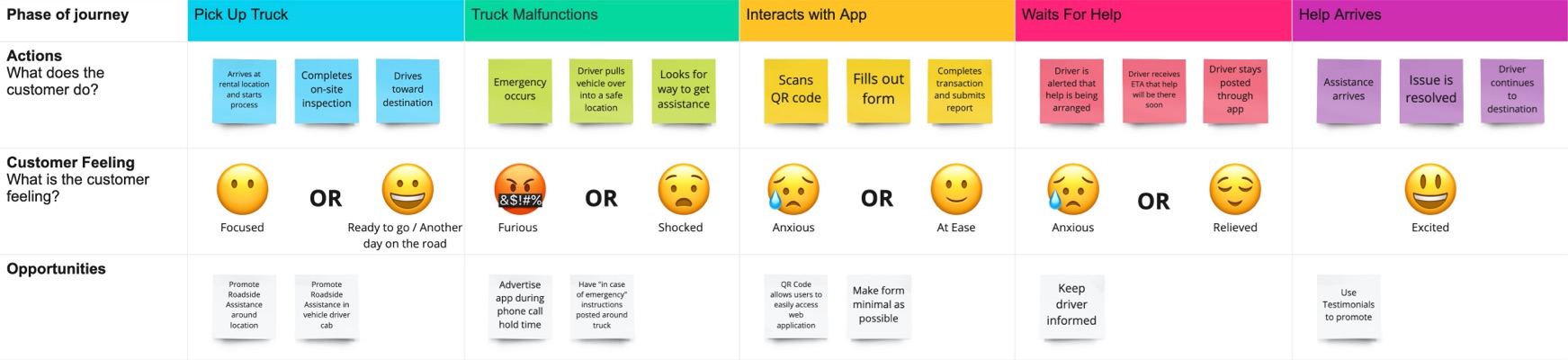
The Story
In order to know what we are going to need to design, we need to illustrate a roadside emergency involving Randy.
Ideate: Exploring Opportunities
My team and I assembled an affinity map to organize the results of our competitive analysis into gaps left by the competition and opportunities presented by these gaps.
Affinity Map
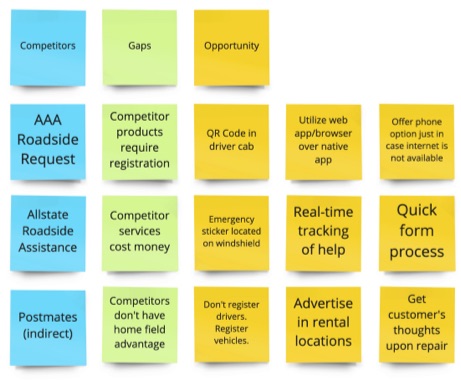 An affinity map is a great way to organize the results of the competitive analysis into opportunities left by the competition.
Top Opportunities
1. Register vehicles, not drivers — to streamline registration process
2. Emergency sticker located on windshield with unique QR Code
3. Real-time GPS tracking of assistance vehicle
4. Streamline form process to 3 steps
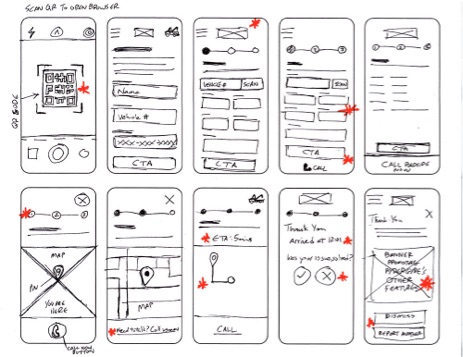
From Ideas to Sketches to Wireframes
With opportunities identified, we sketched, iterated, and refined wireframes for each step of the flow. Since users will have limited access to the internet and 91% of Americans own a smartphone as of 2024, mobile screen sizes were the natural focus for this project.
Ideas to Implement
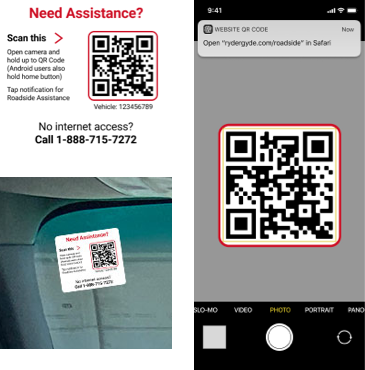
1. Use QR Codes in Cabs
All windshields on vehicles have an emergency sticker with a QR Code that preloads vanity URL with essential information.
2. Web Over Native Apps
Instead of downloading a native app, we can utilize this feature as a web application to not only expedite adoption but assure compatibility.
3. Eliminate Registering
Registering is the biggest hurdle with new users. If we create profiles for vehicles by their vehicle number, then the driver’s name is all that is needed at check-in for a complete profile.
Sketches
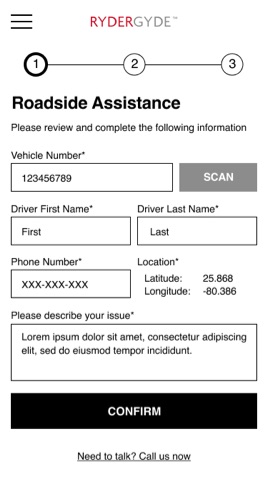
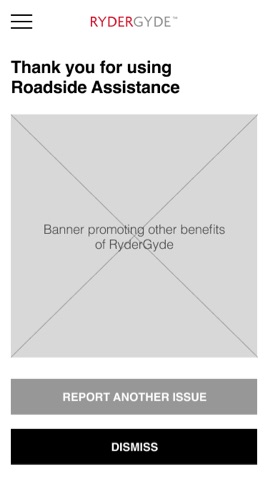
Complete information
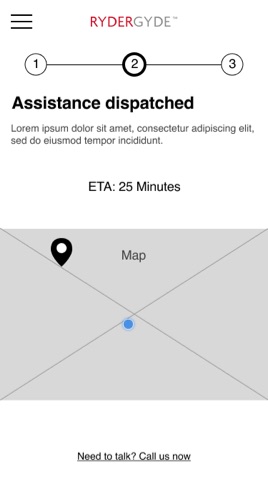
Assistance Dispatched
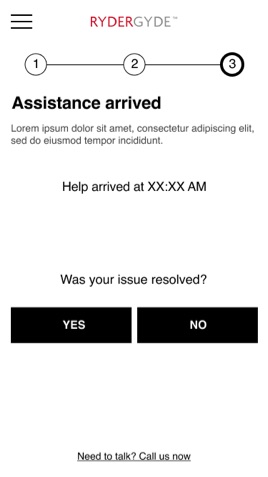
Assistance Arrived
Low-Fidelity Prototype & Testing
Observing users interacting with prospective designs is crucial to finding out if the designs work practically.
Summary
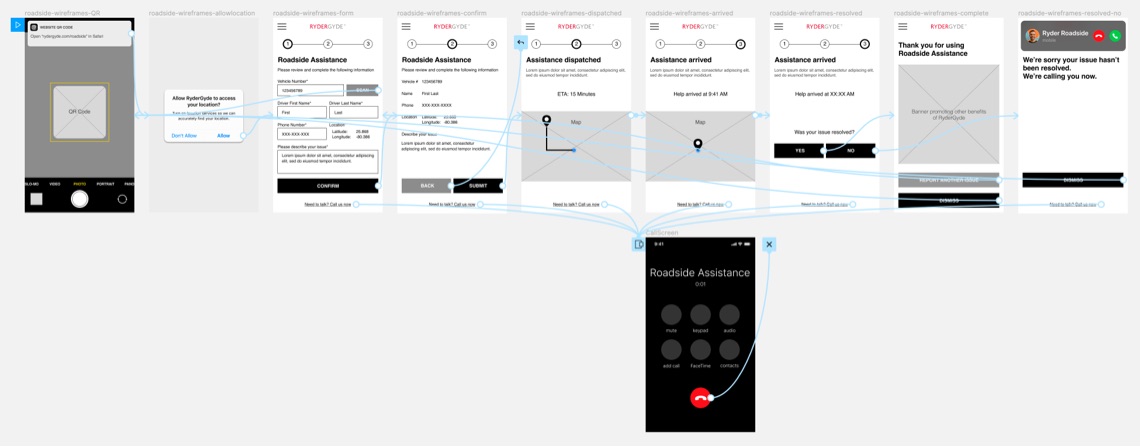
After assembling a lo-fi prototype to demonstrate a truck driver's journey to securing help from Roadside Assistance, I conducted live usability studies with 12 customers at an actual Ryder truck facility, 30 minutes each.
Tasks
- Scan the QR Code
- Complete the simple form
- Receive assistance
Results
Based on live usability studies with 12 truck drivers at an actual Ryder facility, 30 minutes each, asking each to scan the QR code, complete the form, and receive assistance.
100% successfully received Roadside Assistance
"Better than being put on hold"
100% found the app useful
"Saves so much time"
100% reacted positively
"I wish I knew about this before today"
92% would use it in the future
"I just want help as fast as possible"
Results were overwhelmingly positive on the first round, so no retest was needed — the team moved straight to high-fidelity mockups.
High-Fidelity Mock-ups
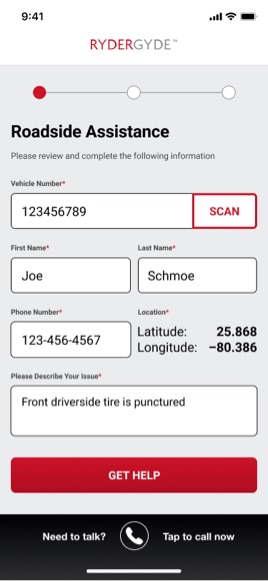
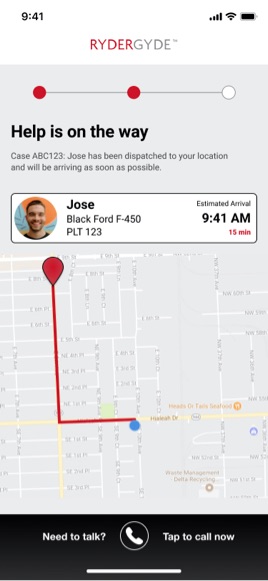
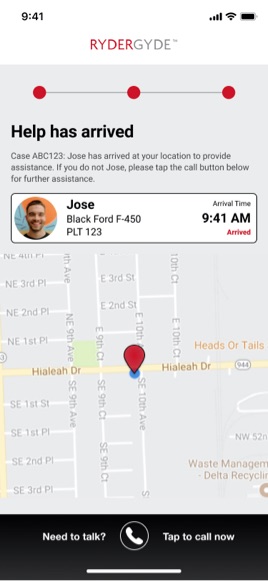
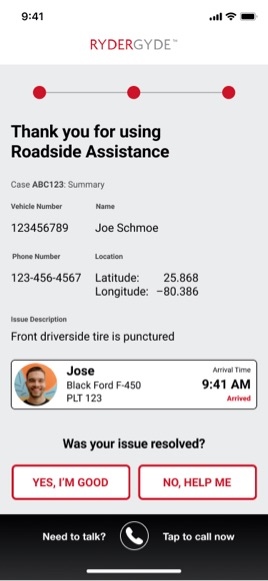
After validating our solutions with users, the next step was to finalize our screens and bring them to life.
Step 1

Step 2
Step 3
Complete
Final Prototype
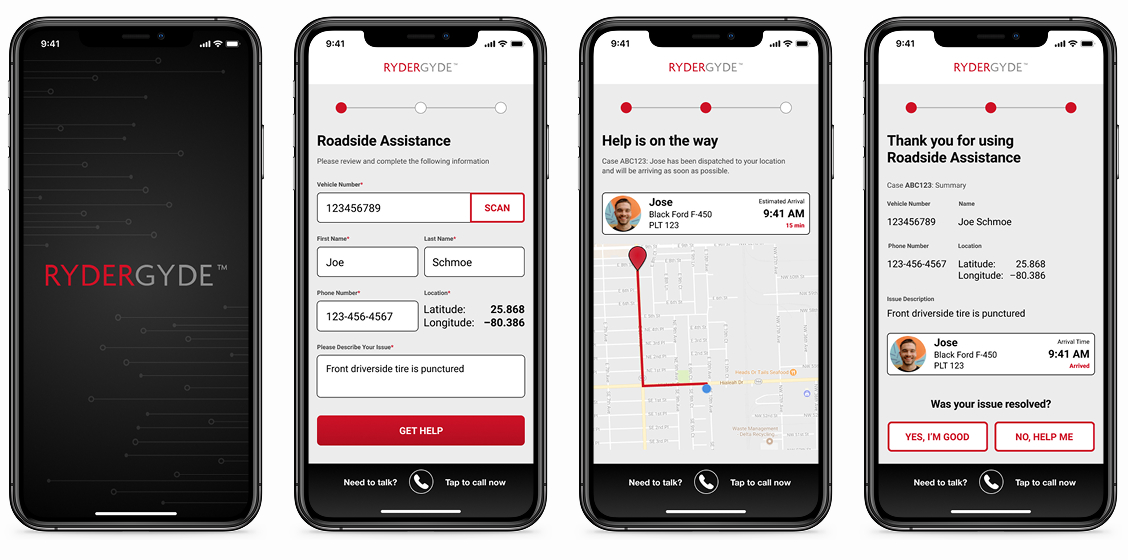
The final step before handing off our designs to the development team was to take our high-fidelity mock-ups and create a working prototype, which would be an integral part of future presentations, helping us verify the final details with testers, and serve as a visual template for the developers to emulate.
Beyond Roadside Assistance
Roadside Assistance wasn't the only friction point drivers dealt with on the road. Fuel expense reconciliation was entirely manual — drivers turned in paper receipts, and accountants had to sort, match, and enter each one by hand before fuel taxes could be reported correctly across states. It was slow, error-prone, and pulled accounting time away from higher-value work.
I designed a mobile flow letting drivers photograph and submit fuel receipts directly from the road. Each receipt is logged digitally and organized for International Fuel Tax Agreement (IFTA) reporting, replacing the physical stack of paper receipts accountants previously reconciled by hand.
Lessons Learned
1. Technology has its time
In a pre-pandemic world, QR codes were a forgotten craze even though native camera apps can scan them. But now that people don't want to touch anything, they've become commonplace, proving that integration and usefulness are necessary for technology to be accepted.
2. Web apps are powerful
A Progressive Web Application (PWA) is a quick and cost-effective way to provide a simple experience for any user across platforms through a browser. For this project, its simplicity helped with user adoption and convenience.
3. No more registering
A huge hurdle for new users is getting them to register. Not only is it a hassle, signing up for yet another app, but it can be a deal breaker. By eliminating this hurdle for drivers, we can quickly get them the assistance they desperately need and possibly win over a new user for the native app.